Clara's Gravel Blog: All about Nutrition

Nutrition in Gravel Racing – Why Fuelling Suddenly Becomes Part of the Race Strategy
29.05.2026
When you move from road racing to gravel, you quickly realise that it’s not just the terrain that changes — everything around nutrition changes as well, and quite dramatically.
In road racing, fueling was something that simply worked in the background. If my bottles were empty, I called the team car. If I wanted a different flavour, I just informed the soigneurs. Ice-cold bottles, musettes filled with bars and gels, ice socks for the neck — there was always someone making sure you had exactly what you needed. You basically just had to focus on riding.
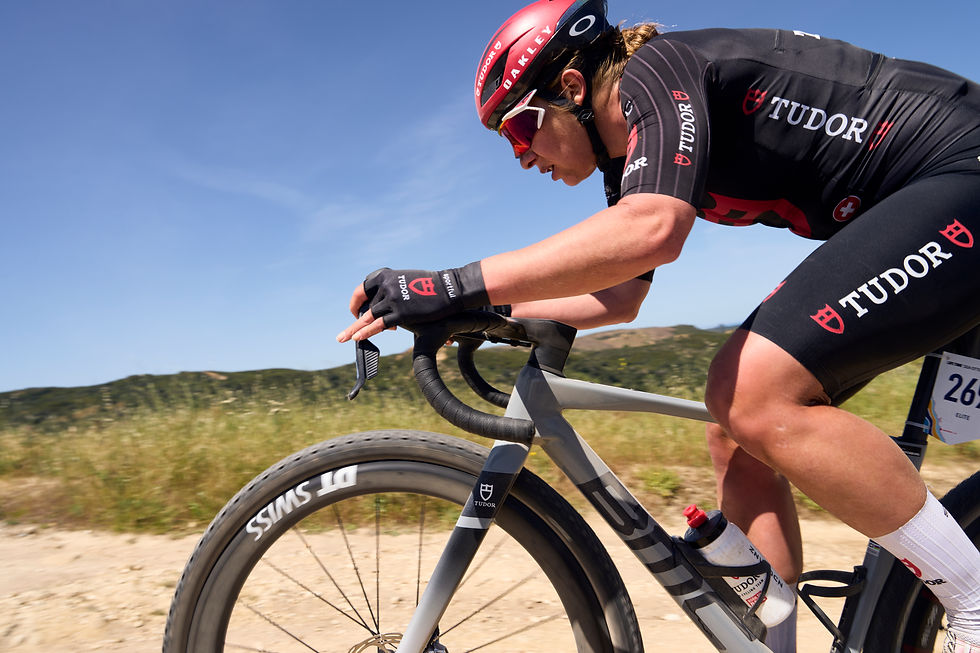
In gravel? Welcome to self-service mode.
No team cars. No constant support. No endless opportunities to grab fresh bottles every hour. Instead, in races lasting anywhere between five and ten hours, there might only be two or three feed zones. Even there, you still need to figure out who can actually hand you something. Otherwise, it means stopping briefly, refilling bottles yourself, and getting going again.
That’s exactly why nutrition in gravel suddenly becomes a real part of the race strategy.
Gravel means planning instead of improvising
In gravel, I have to rely mostly on myself.
That already starts days before the race. Which bottles am I carrying? Where are we placing our supplies? How many grams of carbs will I realistically need? How much fluid do I have to carry?
Especially at long races like The Traka or Unbound Gravel, fuelling almost becomes a small science project.
And unlike road racing, we prepare everything ourselves. No soigneurs mixing bottles for us in the background. No magical resupply from the team car. That means the calculations actually need to be right.

One small trick that has simplified race days massively for Jan and me is that we now use almost exactly the same nutrition setup. Same bottles, same carb mix, same gels, same organisation. It sounds simple, but during hectic feed zones it makes a huge difference. If someone hands us musettes during the race, nobody has to think about whose bottles belong to whom — they can simply grab the next musette and hand it over. In gravel, reducing complexity wherever possible is honestly one of the best forms of race preparation.
With the Team, we use products from NDURANZ — usually the 45g carb gels and the 90g carb drink mix, which honestly makes the maths much easier.
During races, I aim for around 100–130 grams of carbohydrates per hour. Most of that comes through my bottles, and I usually drink around 500 ml per hour. On top of that, I try to take one gel roughly every 20 kilometres.
It all sounds very structured and professional. In reality, it’s often slightly chaotic.
Eating during gravel is not glamorous
Back in road racing, I used to eat far more bars during races. There were always moments where the bunch slowed down, everyone soft-pedalled a little, and you actually had time to chew.
Gravel feels completely different.
You’re basically riding at a “disgustingly hard tempo” all day long. There’s almost no real recovery. Even on descents, every muscle stays tense because you’re constantly stabilising the bike. Hands, shoulders, back — everything is working. And unlike on the road bike, taking your hands off the bars isn’t always that simple. Sometimes, even opening a gel becomes a technical skill.
That’s why I rely much more on liquid carbs and gels now. One thing I’ve learned the hard way is that organisation matters almost as much as the nutrition itself. Gravel races require carrying far more equipment than road races — extra gels, tools, plugs, pump, phone, sometimes even extra layers — and once your jersey pockets become chaotic, eating regularly suddenly becomes much harder too.

I try to keep the setup identical every race. Normal gels always go in my right pocket because that’s the easiest side for me to reach while riding technical terrain. That’s where I grab from most frequently, so it needs to be simple and automatic. The left pocket is usually for caffeine gels or bars — things I’ll only take during calmer moments later in the race. Caffeine is often something I specifically save for around 45 minutes before decisive sections or key moments in the race. The middle pocket is reserved for my phone and repair tools so I never have to search around mid-race. It sounds obsessive, but small systems like that save both time and mental energy when you’re already deep in the red physically.
During really long races, though, I still need to force myself to eat some solid food because eventually your body just craves something different from sweet drinks and gels. But honestly, after eight hours of gravel racing, a dry energy bar can start feeling like flavoured concrete.
One thing I’ve also learned over time is that fueling early almost always works better than trying to “catch up” later. In gravel especially, there are often long periods where eating becomes difficult because the terrain is too rough or the pace is simply too high. If you fall behind on carbohydrates early in the race, it can become surprisingly hard to recover from it later.
Sometimes I’ll even loosen or partially open gels before rough sectors because trying to wrestle packaging open on technical gravel with tired hands can become ridiculously frustrating.
The feed zone: controlled chaos
One of the more entertaining parts of long gravel races is definitely the feed zone.
A few minutes before entering, the stress already starts building in my head. At races where we use hydration vests, I first have to pull the bladder out of the back of my race suit, throw it toward our helpers, grab the new one, somehow stuff it back into the suit while still moving, switch bottles at the same time, and ideally not crash into anyone around me.
It’s not exactly elegant.

But that’s also part of what makes gravel special. It’s less controlled, less polished, and often far more improvised than traditional road racing. You really learn to listen to your body and take responsibility for your own fueling. Because once you run out of energy, you can’t simply “call the car”.
Another small gravel-specific trick: during really wet and muddy races, we’ll often carry one extra bottle filled only with water — not for drinking, but purely for cleaning. Being able to spray mud off the chain, derailleur, or even your glasses can genuinely save a race. In dry conditions you barely think about it, but in proper mud, visibility and drivetrain performance suddenly become part of race management too, because everything is connected to keeping momentum and avoiding unnecessary stress.
From homemade rice cakes to survival mode
A thing I sometimes miss from road racing is the level of care around nutrition. Our soigneurs used to make fresh rice cakes and rice crispy treats every single day — different flavours all the time. Chocolate, Oreo, berries… honestly, some days it felt closer to a small bakery than a WorldTour setup.
Now, with Jan and me mostly taking care of everything ourselves, things have become much simpler. We’re happy if we manage to organise the basics properly.
For very long races, I’ve also started experimenting with a small top tube frame bag from Apidura to carry additional gels. At first I didn’t love the idea because I always preferred keeping the bike light and clean, but once you get beyond seven or eight hours of racing, having easier access to extra fuel can outweigh the small aerodynamic or aesthetic compromises.
The one exception: my homemade banana bread. That still makes an appearance in the days before races — freshly baked and absolutely non-negotiable.
Breakfast at 4:30 a.m. is part of the job
Gravel races start brutally early - often at 6 or 7 a.m., which doesn’t exactly make breakfast enjoyable.
So I try to keep things very simple: cornflakes with milk and honey. Pure carbs, low fibre, low fat — easy on the stomach and reliable energy.
I usually eat about 2 to 2.5 hours before the start. On the drive to the race, I already start drinking my first carb bottle so that my glycogen stores are topped up before the race even begins.

Jan and I also keep things very simple in the one or two days leading into races: pasta, chicken, cottage cheese, and tomato sauce. The only recurring debate is which pasta shape is superior — an argument that will probably never truly be solved.
One thing Jan really taught me is how important it is to actually fill your carb stores properly before a race. At the same time, we try to keep fibre low because it unnecessarily holds water and puts extra stress on digestion.
And if we realise we didn’t quite eat enough carbs the day before? Then sometimes a Fanta or iced tea suddenly becomes part of the performance plan. Not scientifically perfect — but surprisingly effective.
After the race: less structure, more life
Gravel is more relaxed.
At the race festival area, there might be pasta, fries, gnocchi, or whatever food happens to be available. And honestly, I’ve really started to love that part of it too.
You sit together with other athletes — still in bib shorts, mud on your face, covered in dust and dirt — exchanging stories from the day, letting the race slowly sink in, and simply eating whatever sounds good in that moment.

There’s something incredibly rewarding about finally sitting down after hours of racing, refueling with proper food, taking a deep breath, and chatting with friends while everyone is still carrying the chaos of the day with them.
And in the evening, we’ll often go out for dinner with friends or the BMC Racing Team crew. That’s when burgers, pizza, or sushi finally make their comeback — something enjoyable, something comforting, something to celebrate the day a little.
Because despite all the science around carbs, hydration, and fueling strategies, gravel has taught me one thing above all:
Nutrition should support performance. But it should still leave room for enjoyment too.